

Your home is made up of major systems that quietly do their jobs until the day they don’t, and that day is almost always more expensive and more disruptive than a little planned maintenance would have been. Most homeowners know they should check the furnace filter or clean the gutters, but few have a complete, season-by-season picture of everything that deserves a yearly look. This checklist walks through the big systems worth inspecting every year, from your roof to your plumbing to the ground beneath your yard, so you can catch small problems before they become costly emergencies. Use it as a starting point for building your own annual home maintenance routine.
Inspect Your Heating and Cooling System Before Each Season Change
Your heating and cooling system works harder than almost anything else in your house, and it pays for that effort with wear that adds up quietly over the years. Scheduling a checkup with a qualified HVAC company each spring and fall helps catch worn belts, low refrigerant, or failing capacitors before they turn into a breakdown during the first heat wave or cold snap. A technician can also clean coils and check airflow, which keeps your system running efficiently and can meaningfully lower your energy bills.
Between professional visits, there are things you can do yourself to keep the system in good shape. Replacing filters regularly, keeping outdoor units clear of debris, and listening for unusual noises are all simple habits that extend equipment life. If you do notice warm air blowing when you expect cold, or strange smells coming from the vents, it’s worth calling for AC repair right away rather than waiting, since small refrigerant or electrical issues rarely resolve themselves.
- Schedule a spring tune-up before cooling season and a fall tune-up before heating season
- Replace or clean filters every one to three months depending on usage
- Keep at least two feet of clearance around outdoor condenser units
- Listen for grinding, rattling, or clicking sounds that weren’t there before
- Check that vents and returns throughout the house are unobstructed
Choose the Right Professional When Your Cooling System Needs Attention
Not every repair job is the same, and knowing how to evaluate the businesses that work on your cooling equipment can save you money and frustration down the road. When comparing AC companies, look for licensing, insurance, and clear written estimates rather than choosing based on price alone. A reputable business will walk you through what’s wrong, what your options are, and roughly how long the repair should take.
It also helps to ask about warranties on both parts and labor, since a cheap repair that fails again in six months isn’t actually a bargain. Reading recent customer reviews and asking neighbors for recommendations can reveal patterns you won’t find in an online ad. Taking the time to vet a company before you’re in a heat-related emergency means you won’t be stuck making a rushed decision under pressure.
- Verify licensing and insurance before scheduling any work
- Ask for a written estimate that breaks down parts and labor
- Confirm warranty terms on both the repair and any replacement parts
- Check recent reviews rather than relying only on star ratings
- Get a second opinion for any repair estimate over a few hundred dollars
Check Your Roof for Damage and Wear Every Year
Your roof takes the brunt of every storm, so a yearly inspection is one of the most valuable things you can do for your home’s long-term health. The best times to check are in early spring and late fall, before and after the seasons that put the most stress on shingles and flashing. Walk the perimeter of your house and look for missing, curling, or cracked shingles, along with any sagging spots that might indicate structural issues underneath. While you’re at it, check the flashing around chimneys, vents, and skylights, since these are common spots for leaks to start. Inside the attic, scan for water stains, daylight peeking through the roof boards, or a musty smell that could point to hidden moisture damage. Granules collecting in your gutters are another warning sign, as they often mean your shingles are nearing the end of their lifespan. If your home uses roof metal decking as its base layer, it’s worth having a professional check for rust or corrosion, especially in areas with heavy rain or coastal humidity. Metal decking can deteriorate from the underside out, so surface appearances alone won’t always tell the full story. A qualified inspector can also check fastener integrity and seams, since these are typically the first points of failure as the material ages.
Catching problems early often means the difference between a simple patch and a full roof replacement. Granules collecting in your gutters, daylight visible through the attic boards, or water stains on ceilings are all signs that your roof needs attention sooner rather than later. Curling, cracked, or missing shingles, rusted flashing around chimneys and vents, and sagging spots on the roofline are other red flags worth noting. Walk the perimeter of your house with binoculars rather than climbing a ladder, since most warning signs are visible from the ground. Pay close attention to valleys where two roof planes meet, as these areas shed the most water and wear out faster than flat sections. Inside the attic, check for damp insulation, dark mold spots, or a musty smell, all of which point to a leak that hasn’t yet shown up on the ceiling below. A yearly inspection, ideally after the harshest part of your local storm season, gives you a clear picture of how much life your roof has left. Most asphalt shingle roofs last between 15 and 25 years, so knowing the age of your roof helps you judge whether an issue is a minor repair or an early signal that full roof replacement is on the horizon. If you’re not comfortable inspecting the roof yourself, a professional check every few years can catch subtler problems, like weakened decking or compromised seals, before they turn into costly surprises.
- Look for missing, cracked, or curling shingles from the ground or with binoculars, ideally in spring and fall
- Check the attic for daylight, water stains, or damp insulation, especially after heavy rain or snowmelt
- Inspect flashing around chimneys, vents, and skylights for gaps, rust, or lifted edges where leaks commonly start
- Note excessive granule buildup in gutters or at downspout outlets, a sign shingles are aging and losing protection
- Check for sagging roof lines or soft spots, which can signal structural trouble underneath
- Clear debris like leaves and branches that trap moisture against the roof surface
- Have a professional assess the decking if your roof is more than fifteen years old or shows multiple warning signs
Keep Your Gutters and Drainage Working as Designed
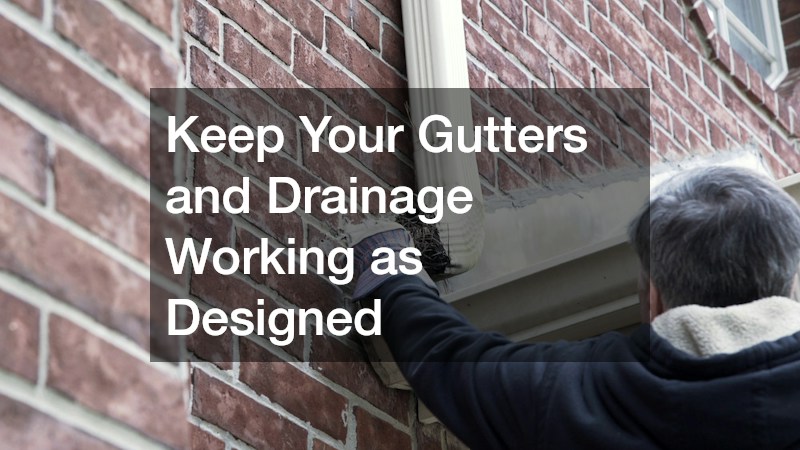
Gutters are easy to forget until water starts pouring over the edge during a storm, but their job is critical to protecting your foundation and siding. Cleaning them out at least twice a year, more often if you have overhanging trees, prevents clogs that can lead to water damage along your roofline and walls. If your existing gutters are constantly pulling away from the house or leaking at the seams, it may be worth upgrading to seamless gutters, which are custom-fit to your home and have far fewer spots where leaks typically start.
Beyond cleaning, check that downspouts direct water at least several feet away from your foundation. Standing water near the base of your house is one of the most common causes of basement moisture and cracked foundations. A few minutes spent checking slope and drainage each year can prevent much larger repairs later.
- Clean gutters in spring and fall at minimum
- Check for sagging sections or pooling water along the gutter line
- Make sure downspouts extend well away from the foundation
- Inspect seams and joints for leaks after a heavy rain
- Trim back overhanging branches that drop debris into the gutters
Have Your Septic System Serviced on a Regular Schedule
If your home relies on a septic system rather than municipal sewer, yearly attention is essential to avoid backups and costly repairs. Most households need septic pumping every three to five years, but a yearly inspection helps you track sludge levels and catch small issues, like a failing baffle or a cracked lid, before they become major problems. Skipping this maintenance is one of the most common reasons homeowners end up with sewage backups in their yard or home.
Simple habits also protect your system between services. Avoid flushing wipes, grease, or harsh chemicals, and be mindful of how much water you’re sending down the drain during heavy use days like laundry marathons or holiday gatherings. A septic system that’s cared for consistently can last for decades without major incident.
- Schedule a professional inspection every year, even if pumping isn’t due
- Keep a record of pumping dates to track your system’s schedule
- Avoid planting trees or shrubs near the drain field
- Never flush wipes, paper towels, or cooking grease
- Watch for slow drains or soggy patches in the yard as early warning signs
Understand Your Plumbing System’s Yearly Maintenance Needs
Plumbing problems often develop slowly, hidden behind walls or under sinks, which makes a yearly check especially valuable. Walk through your home and look under every sink, behind the washing machine, and around the water heater for signs of moisture, rust, or mineral buildup. Catching a small leak early can prevent the kind of water damage that costs thousands of dollars to repair.
It’s also smart to have a professional take a closer look every couple of years, particularly if your home is older or you’ve noticed changes in water pressure. Experienced plumbers can spot early signs of pipe corrosion, check your water heater’s anode rod, and test your main shutoff valve to make sure it still works when you need it. Knowing where that shutoff valve is located, and confirming it turns easily, is one of the simplest things you can do to limit damage during an emergency.
- Check under sinks and around appliances for slow leaks
- Test water pressure and note any sudden changes
- Flush the water heater yearly to remove sediment buildup
- Locate and test your main water shutoff valve
- Watch for discolored water, which can indicate pipe corrosion
Evaluate Your Home’s Foundation and Surrounding Soil
Foundations shift gradually, so yearly observation is the best way to catch small cracks before they widen into structural concerns. Walk the exterior of your home and look for cracks wider than a quarter inch, doors or windows that have started sticking, or gaps forming between the foundation and the soil. Grading matters too, since soil that slopes toward the house instead of away from it can direct water right where you don’t want it.
When foundation repairs are needed, contractors sometimes use flowable fill to stabilize voids or support areas where soil has eroded or settled unevenly. This self-leveling material flows into gaps more effectively than compacted soil, making it a useful option for correcting drainage-related settling. Addressing these issues early, before cracks spread or doors stop closing properly, keeps repair costs manageable.
- Check exterior walls for new or widening cracks each year
- Confirm the soil grade slopes away from the foundation
- Watch for sticking doors or windows, a common early sign of shifting
- Look for gaps forming between the foundation and surrounding soil
- Address drainage issues promptly to prevent further settling
Prepare Your Home’s Safety Systems for Severe Weather

Beyond mechanical systems, your home’s ability to keep your family safe during extreme weather deserves a yearly review. If you live in an area prone to tornadoes or severe storms, check that your storm shelter is accessible, stocked with basic supplies, and free of clutter that could slow you down in an emergency. It’s easy to let a shelter become a storage closet over the years, so a yearly walkthrough ensures it’s actually ready to use.
This is also a good time to test smoke detectors, carbon monoxide alarms, and any emergency generators you rely on during power outages. Replace batteries even if they seem to be working, since a sudden storm is not the time to discover a dead backup power source. A short annual safety review takes less than an hour but can make a significant difference when severe weather actually arrives.
- Clear out clutter and confirm easy access to your shelter space
- Stock water, flashlights, and a first aid kit, checking expiration dates yearly
- Test smoke and carbon monoxide detectors and replace batteries
- Run backup generators periodically to confirm they start reliably
- Review your family’s emergency plan so everyone knows where to go
Keeping your home’s major systems in good condition doesn’t require a complicated schedule, just a yearly commitment to walking through each one with a careful eye. Start with whichever system worries you most, whether that’s an aging roof, a septic system you haven’t thought about in years, or plumbing that’s been making odd noises, and work your way through the rest of the list over the following months. Small, consistent checkups cost far less than emergency repairs, and they give you peace of mind that your home is ready for whatever the next season brings.