
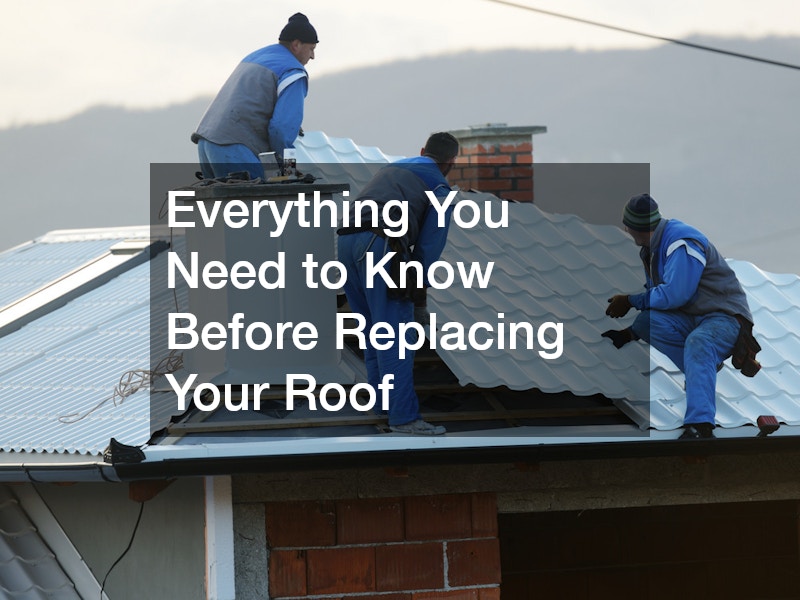
For the vast majority of homeowners, the roof over their head is an infrastructure system that is entirely taken for granted until it fails. It is the absolute primary boundary between your family, your valuable personal assets, and the unpredictable, destructive forces of nature. Yet, because a roof operates high above our daily sightlines, it is remarkably easy to ignore until water actively breaches the ceiling.
Replacing a residential roof is one of the most significant, high-cost, and logistically complex capital investments a property owner will ever face. It is a major civil engineering project executed on top of your home, requiring a careful balance of financial budgeting, material science, legal compliance, and technical craftsmanship. Making uninformed choices during this transition can lead to devastating structural damage, voided material warranties, and immediate financial losses. This comprehensive guide outlines everything you must understand before committing to a total roof replacement, ensuring your property remains an efficient, safe, and beautiful sanctuary for decades to come.
Understanding When Repairs Are No Longer Enough
The decision to completely tear off and replace an existing roof, rather than performing a series of targeted patches, is a critical turning point for any homeowner. Every roof is a depreciating asset with a fixed operational lifespan. While minor wind storms might dislodge a few shingles that can be easily replaced, there comes a mechanical tipping point where the underlying structural components have degraded to a level where temporary fixes are no longer fiscally responsible.
When you notice chronic leaks in multiple rooms, extensive sagging along the ridge line, or an accumulation of mineral granules in your downspouts, your system is signaling a total failure of its watertight matrix. Procrastinating at this stage by continually paying for localized roof repair is a counterproductive strategy that drains your bank account while failing to secure the structure. Water follows the path of least resistance, and when your primary roofing material loses its structural integrity, moisture slowly rots the underlying wooden deck, destroys insulation, and fosters toxic mold inside your attic. Recognizing that a replacement is the only way to arrest this compounding decay protects your home’s core equity.
Evaluating Your Home’s Roofing Needs Before Replacement
Before you request contracts or select material colors, you must conduct a forensic evaluation of your home’s specific structural, geographical, and architectural requirements. A roof is not a one-size-fits-all product; a design that functions perfectly on a steep-slope mid-century bungalow will fail instantly on a low-slope contemporary home or an antique historical estate. You must evaluate your attic’s current ventilation status, as a roof that cannot breathe will trap heat and condensation, baking your shingles from the inside out and cutting their operational lifespan in half.
During this evaluative phase, researching the broader parameters of modern residential roofing will reveal how your roof operates as a dynamic ecosystem. You must consider the total weight allowances of your home’s framing skeleton. For instance, swapping a lightweight asphalt system for heavy clay tiles or natural slate can add thousands of pounds of dead weight to your rafters, potentially requiring structural reinforcement before installation can legally begin. Evaluating your property’s specific pitch, load boundaries, and insulation needs ensures that your new system is engineered for optimal thermal efficiency and permanent waterproofing protection.
Comparing Service Options Before Making a Decision
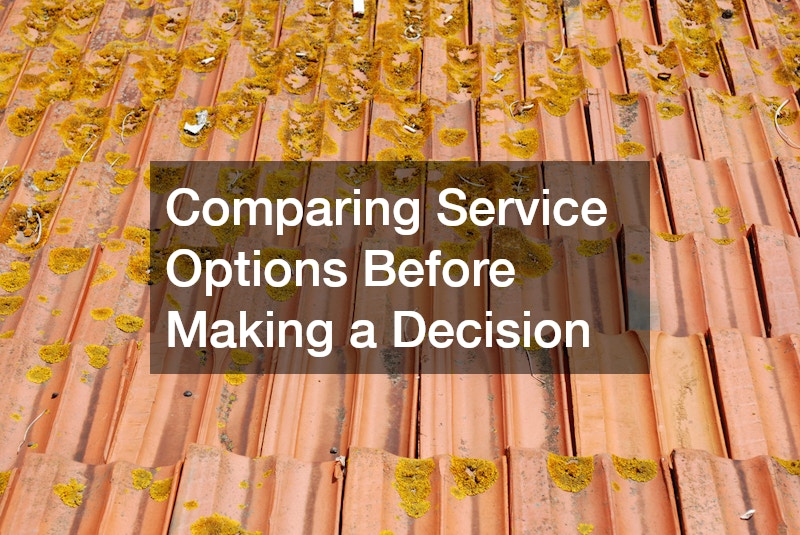
The residential construction market is saturated with service providers ranging from independent, uncertified laborers to high-capacity corporate operations. It is remarkably tempting to make a hiring decision based strictly on the lowest initial estimate you receive, but this short-sighted approach frequently leads to substandard installation quality, extended project delays, and predatory change-orders once your old roof is torn off.
To safeguard your financial investment, you must dedicate time to systematically interviewing and comparing different roofing companies. Request detailed, line-item estimates from at least three competing firms. A legitimate quote should break down the cost of labor, exact material brands, underlayment grades, flashing replacements, disposal fees for old debris, and the cost of municipal building permits. Comparing these offers side-by-side allows you to identify where the true value lies, ensuring that you choose a company that balances fair market pricing with comprehensive project transparency.
Researching Professionals in Your Local Area
The longevity of your new roof is entirely dependent on the accountability and technical precision of the crew executing the work. The roofing industry is frequently plagued by transient, out-of-town contractors who descend on communities immediately following a major hailstorm or tornado, collect insurance payouts for fast installations, and vanish before any defects in their work manifest. If a leak develops a year after installation, an out-of-town company will not be there to honor their warranty.
To avoid falling victim to these predatory operations, focus your research exclusively on verified, established local roofers. Nearby professionals maintain physical offices within your community, possess deep roots in the local economy, and rely heavily on their regional reputations to drive their businesses. Check their standing with the Better Bureau, read localized consumer reviews, and verify that they carry active general liability and workers’ compensation insurance. Choosing a team based directly in your area guarantees that if your roof requires future adjustments or warranty service, a trusted team is only a local phone call away.
Exploring Different Material Choices and Benefits

Modern product manufacturing has introduced an incredible array of residential roofing choices that move far beyond traditional asphalt options. While standard architectural shingles remain the cost-effective benchmark, homeowners looking to maximize their home’s equity, fire resistance, and architectural distinction are increasingly looking toward high-performance structural upgrades.
If your long-term goal is permanent structural durability, consulting with specialized metal roofers opens up an exceptional tier of property defense. Metal roofing systems—constructed from premium steel, aluminum, or copper—are completely impervious to rot, insect damage, and moss accumulation. They carry an operational lifespan of forty to seventy years, meaning a single metal installation can easily outlast two or three standard asphalt roofs. Furthermore, metal systems reflect a massive percentage of solar radiation, lowering your home’s cooling costs during peak summer heat waves and making them a highly sustainable, eco-friendly investment.
Reviewing Experience and Project Qualifications
Once you have narrowed down your list of potential contractors, you must move beyond basic references and conduct a strict audit of their specific technical project qualifications. Roofing installation involves complex water management, high-voltage electrical routing for attic fans, and precision metal welding for valley flashing. An installer who has spent fifteen years exclusively nailing standard shingles may not possess the sophisticated skill set required to execute a standing-seam metal profile or a natural slate valley.
When interviewing a prospective roofer, explicitly ask about their manufacturer-specific certifications. Elite manufacturers grant certified status only to contractors who undergo rigorous, ongoing training and maintain flawless credit and safety records. Hiring a certified professional allows them to offer extended, manufacturer-backed warranties that cover both material defects and installation labor for up to twenty-five or thirty years. Verifying these elite project qualifications before signing a contract ensures that your roof is installed in strict accordance with engineering codes, fully securing your long-term financial safety net.
Identifying Damage That Requires Immediate Attention
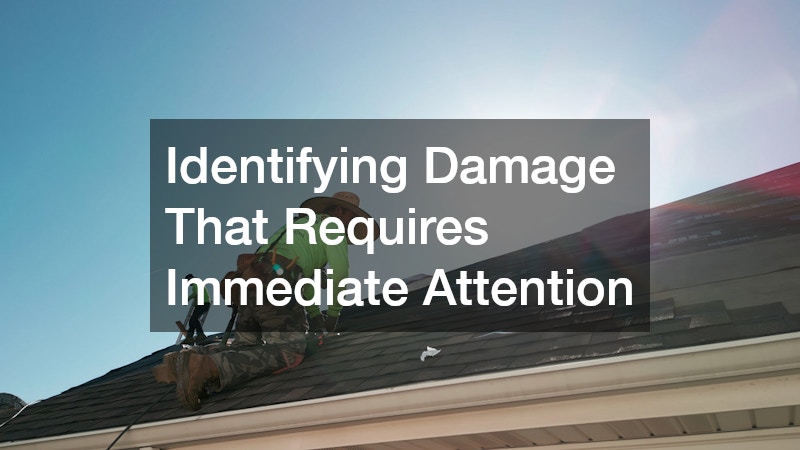
While a total roof replacement can often be planned over several weeks, there are instances where environmental damage compromises your home so severely that waiting is not an option. If your property is struck by a fallen tree limb, suffers high-velocity wind destruction that strips away entire slopes of shingles, or experiences a major structural leak that floods your attic space during a severe storm, your home is in an active state of emergency.
In these high-stress scenarios, securing the services of a specialist in local roof repair and emergency mitigation is critical to saving your home’s interior finishes. Emergency crews specialize in rapid site stabilization, deploying heavy-duty structural tarping and temporary waterproof barriers to stop the inward migration of water instantly. Delaying an emergency intervention by even a few hours allows water to saturate your drywall, ruin your insulation, short-circuit electrical lines, and spark rapid mold spore colonies, exponentially increasing the ultimate cost of your home’s restoration.
Learning About Material Durability and Performance
To choose a material that aligns perfectly with your long-term financial and property goals, you must understand how different systems handle environmental wear and tear over decades of continuous exposure. Every option has a unique physical threshold for impact, wind resistance, flame spread, and thermal movement. Evaluating these metrics allows you to move past superficial aesthetics and look at a roof as a high-performance engine.
When researching modern roofing materials, pay close attention to specific engineering certifications, such as Class 4 impact ratings, which prove a material can withstand severe hailstones without fracturing its core waterproof layer. You must also evaluate the material’s fire rating; Class A fire-rated materials offer the highest level of defense against wind-blown embers from nearby wildfires. By prioritizing structural durability and performance over the lowest upfront price, you ensure that your materials can easily endure your region’s harshest weather cycles without suffering premature mechanical degradation.
Choosing Contractors Who Understand Local Conditions
Geographic climate variations directly dictate how a roofing system behaves over its operational life. A roof installed in a sun-drenched, high-humidity coastal zone faces a completely different set of structural threats—such as salt-air corrosion, rapid algae growth, and intense UV degradation—than a roof in a northern climate subject to sub-zero temperatures, heavy snow accumulation, and destructive ice dams. An installer from outside your region will frequently fail to calculate these hyper-local environmental stressors.
To protect your home, you must partner with a certified local roofing contractor who possesses decades of experience building within your specific weather jurisdiction. A nearby contractor knows exactly how thick an ice-and-water shield must be along your eaves to comply with local winter freezing patterns, and what specific attic ventilation ratios are required to exhaust summer heat efficiently from your crawlspaces. Their specialized knowledge of local microclimates ensures that your entire roof system is customized to withstand local weather variations, preventing chronic leaking and securing your product warranties.
Preparing for Costs and Project Expectations
The final step in your roof replacement journey is preparing your household for the actual financial layout and physical reality of construction day. A total roof tear-off is a loud, messy, and disruptive process that completely alters your property for several days. Hundreds of pounds of old materials will be stripped away, exposing your home’s wooden skeleton before the new weather-tight layers are systematically built back up.
Before any work begins, securing a binding, comprehensive local roof estimate is vital for your financial protection. This document must clearly state that the price is fixed, limiting your exposure to surprise fees when the old decking is exposed. To prepare your property for construction day, clear your driveway to give heavy material-delivery trucks access, remove fragile items from interior walls that might vibrate during hammering, move patio furniture away from the house’s perimeter, and keep pets and children safely indoors to avoid the hazard of falling debris.
Embarking on a total residential roof replacement is a profound commitment to your property’s long-term health, safety, and market equity. By moving away from a reactive, temporary patching mindset and adopting a highly strategic approach, you transform a potentially overwhelming renovation into a structured, highly successful home upgrade.
The secret to a seamless, high-performance roof installation lies in early site evaluation, diligent contractor screening, and an appreciation for the technical parameters of modern material science. By taking the time to interview verified roofing companies, partnering with an elite local roofing contractor who understands your area’s climate variables, exploring resilient upgrades like those offered by specialized metal roofers, and securing a fixed local roof estimate, you build an unyielding shield of protection around your family and your savings. Your roof ceases to be a source of maintenance anxiety and becomes exactly what it was always meant to be: a beautiful, durable, and permanent architectural crown that secures your peace of mind for a lifetime. Take control of your property’s structural potential today, prioritize craftsmanship over shortcuts, and enjoy the lasting comfort of a home built to stand the test of time.