
There is something inherently peaceful about the sound of trickling water in a backyard. Whether it is a modest goldfish pond, a sprawling koi habitat, or a customized backyard stream, a water feature instantly transforms an ordinary outdoor area into a tranquil sanctuary. However, any experienced property owner will tell you that maintaining that pristine look requires more than just filling a basin with a garden hose. Left alone, stagnant water quickly succumbs to algae blooms, murky organic buildup, and unpleasant odors.
To prevent your peaceful oasis from turning into a swampy headache, you have to look beyond basic mechanical skimming. Achieving long-term balance in a closed aquatic environment requires a deeper look into the mechanics of biological and chemical filtration.
This homeowner’s guide breaks down how to implement advanced purification technologies to keep your backyard ecosystem vibrant, clear, and thriving for years to come.
Understanding the Three Pillars of Pond Filtration
To build a healthy aquatic habitat, you must understand that pond filtration isn’t a single step—it is a three-part system. A successful setup relies on mechanical, biological, and chemical processes working together. Mechanical filtration acts as the first line of defense, physically trapping large debris like falling leaves, twigs, and grass clippings before they can sink to the bottom and rot.
Biological filtration is where the real magic happens. This process relies on beneficial bacteria to break down invisible, toxic ammonia—secreted by fish and generated by decaying plant matter—into harmless nitrates. Finally, chemical filtration uses specialized media to pull dissolved microscopic impurities directly out of the water column. Balancing these three pillars ensures that your water remains safe for fish and crystal clear to the human eye.
Upgrading Your Mechanical Pre-Filtration
Most standard backyard setups rely entirely on basic skimmer baskets. While these are great for catching floating leaves, they allow smaller organic particles to pass right through to your main pump. Over time, this debris clogs your equipment and reduces overall system efficiency. Upgrading to an advanced mechanical pre-filter, such as a rotary drum filter or a sieve filter, changes the game.
Sieve filters work by passing water over a curved, stainless-steel screen. The water drops straight through the micro-gaps, while even the tiniest solid particles are pushed down the face of the screen and entirely out of the water flow. By removing these solids before they have a chance to dissolve or enter the biological chamber, you dramatically reduce the workload on the rest of your system and minimize how often you have to perform manual cleanings.
Supercharging the Nitrogen Cycle with High-Surface Media
Once the heavy solids are out of the way, the water moves into the biological filtration stage. The goal here is to give beneficial nitrifying bacteria as much surface area as possible to colonize. In modern pond engineering, moving bed biofilm reactors (MBBR) have become the gold standard for high-end residential projects.
Instead of static foam pads that clog easily, a moving bed filter uses hundreds of tiny, lightweight plastic media pieces floating inside a chamber. An air pump bubbles aggressively from the bottom, keeping the media in constant motion. This continuous churning serves two purposes: it ensures the bacteria receive a massive, uninterrupted supply of oxygen, and it naturally sloughs off dead bacterial sheets, making the filter completely self-cleaning. The result is a robust, highly responsive biological shield that easily handles spikes in fish waste.
Eradicating Algae via Ultraviolet Sterilization
Even with excellent mechanical and biological filters, single-celled green algae can occasionally take over, causing the dreaded “green water” effect. This is where modern homeowners turn to specialized ultraviolet (UV) clarifiers. A UV clarifier is an enclosed chamber housing an ultra-potent ultraviolet bulb that sits directly inline with your plumbing.
As pond water pumps through the sleeve, the intense UV light penetrates the cellular walls of floating algae, disrupting their DNA so they can no longer reproduce. The dead algae cells clump together, allowing your mechanical filter to easily trap them on the next pass. Integrating these specialized purification technologies into your plumbing loop ensures that you can skip harsh chemical algaecides completely, protecting both your local wildlife and your backyard vegetation.
Optimizing Dissolved Oxygen and Circulation
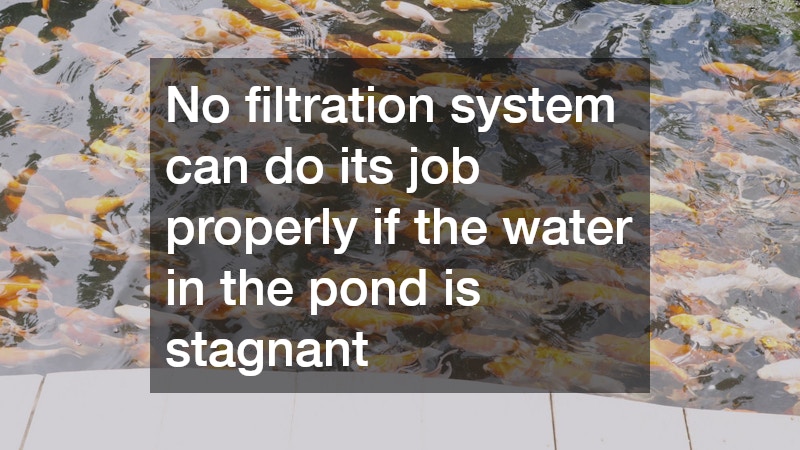
No filtration system can do its job properly if the water in the pond is stagnant. Proper circulation ensures that dirty water from the deep zones is continuously pushed toward your filters, while oxygenated water from the surface is pulled downward. Deep-water aeration systems are the most efficient way to keep things moving.
By placing weighted air stones at the lowest point of your pond, you create a powerful, continuous column of rising bubbles. This bubble column lifts the cool, stagnant water from the bottom and brings it to the surface, where gas exchange can occur. High oxygen levels not only keep your fish active and healthy, but they also supercharge your beneficial bacteria, allowing them to process waste at double the speed.
Creating a breathtaking backyard ecosystem doesn’t mean you have to wage a constant war against nature. By transitioning away from basic, outdated filters and embracing advanced purification technologies, you create a self-sustaining loop that works alongside natural biological processes rather than fighting them.
Investing in high-surface biological media, inline UV sterilization, and regular carbon polishing drastically reduces your physical workload. Instead of spending your weekends skimming muck, backwashing heavy filters, or dumping corrective chemicals into the water, you can finally sit back, relax, and enjoy the pristine beauty of your flawless outdoor retreat.